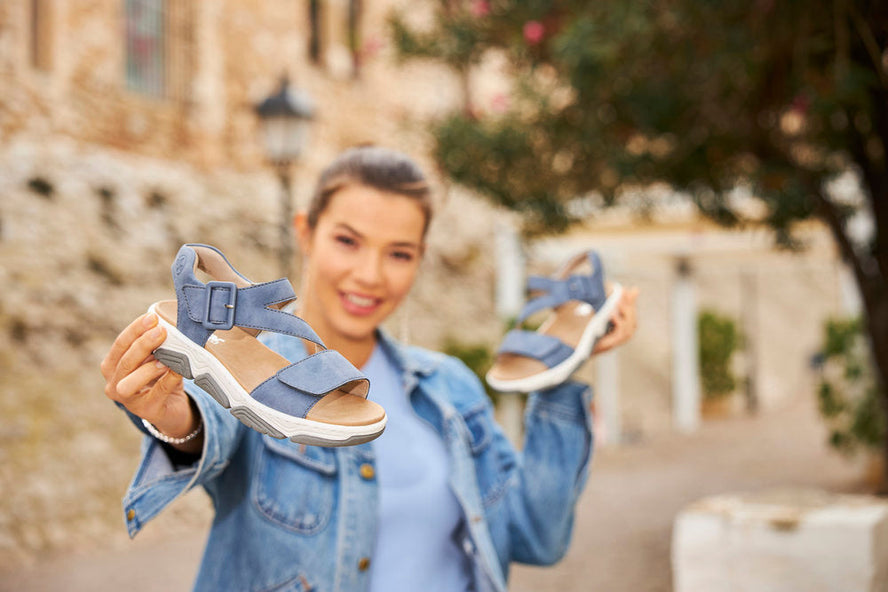
Squeaky sandals are usually caused by trapped moisture, friction or wear within the sole, but thankfully there are several simple ways to stop sandals squeaking using everyday household items.
The ideal walk isn’t just about how comfortable the shoes on your feet are; it’s also about peace of mind. At Rieker, we live by the motto: walk easier, live easier. Ensuring our customers can walk as easily as possible is paramount to our design and manufacturing process.
We believe walking should feel comfortable and effortless. Unexpected squeaking sounds from your sandals can quickly become frustrating, especially once you start noticing them during everyday wear. And once you hear it, you’re very unlikely to be able to ignore it. The good news is that squeaky sandals are usually easy to fix with the right care and maintenance.
So, what causes squeaky sandals in the first place? Our guide will show you some simple tips and tricks to help prevent the problem from returning.
Table of contents
-
How to stop sandals from squeaking
-
Why do sandals squeak when I walk?
-
What makes sandals stop squeaking?
- Sandals at Rieker
How to stop sandals from squeaking
The best ways to stop sandals squeaking include reducing moisture, minimising friction and allowing the soles to dry properly. Household products such as talcum powder, petroleum jelly and waterproof sprays can all help reduce squeaking and improve comfort while walking.
Make walking in your sandals as comfortable and enjoyable as possible by eliminating irritating squeaking sounds. Luckily, there are several ways you can reduce squeaking using simple household items.
Use talcum powder
Don’t let trapped moisture become a nuisance while walking. Applying talcum powder inside your sandals can help absorb moisture and reduce friction between your feet and the sole.
This can be especially helpful during warmer weather when sweat and humidity increase the likelihood of squeaking.
Your feet should fit more comfortably back into your sandals without the risk of further irritating noises.
Spray a waterproofing solution
Waterproofing sprays can help reduce squeaking by creating a protective barrier against moisture.
After applying the spray, allow your sandals to dry fully before wearing them again so you can enjoy a squeak-free walk! As well as helping prevent squeaking, waterproof sprays can also help protect sandals from stains and watermarks.
Spread petroleum jelly
Using a small amount of petroleum jelly can help reduce squeaking and suction noises caused by friction between your feet and the sandal footbed.
Own-brand petroleum jelly or recognisable brands such as Vaseline should do the trick, although it’s important not to overapply the product; using too much can leave sandals feeling slippery and uncomfortable, or even worse, can affect materials over time and damage your sandals.
Try WD-40
While your sandals aren’t the same as a creaking door or a drawer that won’t quite close properly, the old reliable method of putting some WD-40 on it is still surprisingly effective, even in footwear. Avoid using WD-40 on suede sandals, but for other materials, simply spray onto a cotton ball and apply to the outer seams of the sandals to prevent squeaking and suction.
Dryer sheets
While your sandals aren’t the same as a creaking door or a drawer that won’t quite close properly, the old reliable method of putting some WD-40 on it is still surprisingly effective, even in footwear. Avoid using WD-40 on suede sandals, but for other materials, simply spray onto a cotton ball and apply to the outer seams of the sandals to prevent squeaking and suction.
Why do sandals squeak when I walk?
While it’s incredibly helpful to know how to stop squeaking and other bothersome sounds coming from your sandals, it’s equally important to understand why that squeaking happens in the first place. Knowing why your sandals squeak can make it easier to prevent the problem in future.
If you’ve owned a pair of sandals for a long time, general wear and tear may also contribute to squeaking over time. Older soles and worn materials can become less stable, making noises more noticeable during movement.
Another common cause of squeaky sandals is perspiration. During warm weather or longer walks, moisture can build up between your feet and the sandal footbed, creating suction-like sounds with each step.
Wearing moisture-wicking socks or choosing more breathable sandal styles may help reduce moisture build-up during wear. If you want more guidance on tackling odours in well worn shoes, read more on how to get smells out of shoes.
What makes sandals stop squeaking?
Many methods used to stop sandals squeaking work by reducing moisture and friction inside the shoe.
Products such as talcum powder and petroleum jelly help create a barrier between your feet and the sandal, while proper drying techniques help prevent bacteria and dampness from building up inside the sole.
Allowing sandals to dry fully between wears can also help prevent trapped moisture from causing squeaking over time.
Sandals with cushioned footbeds, supportive soles and breathable materials may also help reduce the likelihood of squeaking by improving airflow and reducing friction during movement.
Sandals at Rieker
At Rieker, we design sandals for both comfort and everyday wearability. Our collection of women’s sandals and men’s sandals includes a variety of lightweight, supportive styles designed to help you walk comfortably throughout the day.
Many of our sandals are designed using our signature antistress technology, helping improve flexibility, cushioning and shock absorption with every step.
With more room, lighter materials and enhanced flexibility, our sandals are designed to take the pressure off your feet.